
still remember the day I had to make my first CV. I had just finished my studies, a friend told me about a job opening, and I sat down thinking — okay, this will take maybe 20 minutes.Two hours later, I was still staring at a blank page.The problem was not that I was lazy.
The problem was that every CV guide I found online kept saying things like “list your work experience” and “describe your achievements at previous jobs.” But I had none of that. I had never worked a proper job in my life.If that sounds like where you are right now, keep reading. Because I am going to show you exactly how to make a CV for your first job — even when you have zero work experience — in a way that actually gets you noticed.
First, Stop Thinking a CV Needs to Be LongSeriously. This is the biggest mistake fresh graduates and first-time job seekers make.They think a longer CV looks more impressive. So they stretch everything, add meaningless fluff, or copy-paste descriptions from other people’s CVs. Recruiters notice this immediately — and it does more damage than good.
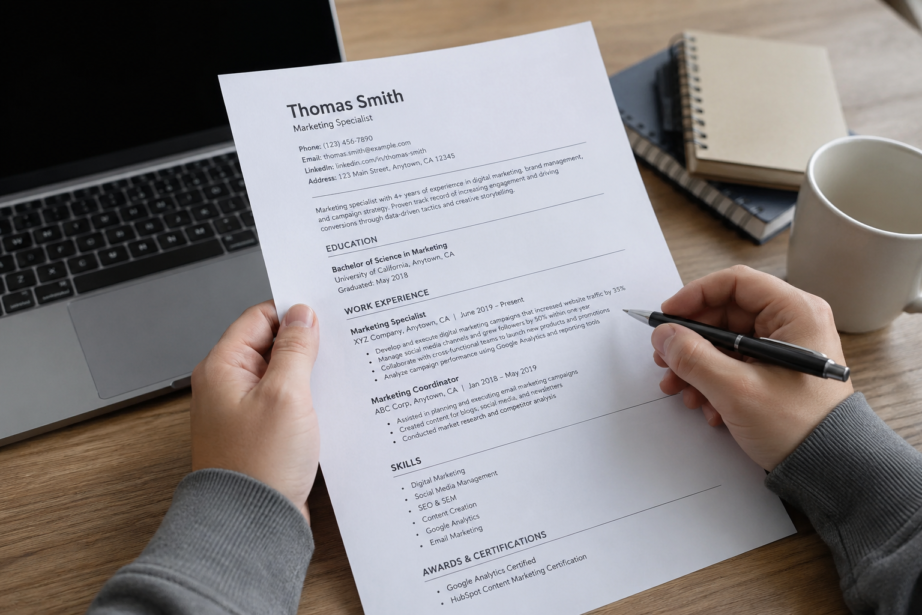
For your first job, one clean, honest page is enough. One page that shows who you are, what you can do, and why someone should give you a chance.That is all you need.What Should Your First Job CV Actually Include?Forget the fancy templates for now. A solid CV for someone with no experience needs just these sections:Your name and contact detailsA personal statement (2 to 3 lines about you)Your educationYour skillsAny other relevant experience — projects, volunteering, part-time workReferencesLet me walk you through each one properly.Your Name and Contact DetailsPut your full name at the top. Use a slightly bigger font so it stands out. Just below that, add:Your mobile numberA professional email address — something like yourname@gmail.com works fine. If your current email has random numbers or nicknames in it, make a new one just for job applications.Your cityLinkedIn profile link, if you have oneThat is it for this section. Clean and simple.Your Personal Statement — Do Not Skip ThisA lot of people leave this out because they do not know what to write. That is a mistake.Your personal statement sits right at the top of your CV, just below your contact details. It is literally the first thing a recruiter reads. Two or three sentences that tell them who you are, what you bring to the table, and what kind of role you are looking for.Here is what most people write:
“I am a hardworking and motivated individual seeking a challenging position.”That sentence tells a recruiter absolutely nothing. Every single applicant writes something like this.Now here is what you should write instead:”I recently completed my Bachelor’s in Business Administration and spent my final year managing the social media accounts for my university’s student society — growing the following from 300 to over 2,000 in eight months. I enjoy working with people, I pick things up quickly, and I am looking for an entry-level role where I can be genuinely useful from day one.”Notice how that second one has a real number, a real thing you did, and a clear idea of what you want? That is what makes a recruiter stop and pay attention.Write your personal statement last, after you have filled in everything else. By then, you will have a much clearer idea of what to say.Your Education Section — Make It Work HarderMost people just write their degree and move on. You can do better than that.Yes, include:Your degree or diplomaThe name of your institutionYour graduation year (or expected year)But also add:Relevant subjects you studiedYour final year project, if it relates to the jobAny academic prizes, scholarships, or achievementsExample:Bachelor of Commerce — University of Karachi, 2024Relevant subjects: Marketing, Business Communication, Financial AccountingFinal Year Project: Studied shopping behavior of customers at three local retail stores and presented findings to faculty panelThat last line is doing a lot of work. It shows you can research, analyze, present, and follow through on something. None of that requires a job title.The Skills Section — Be Honest and Be SpecificDo not write “good communication skills” and leave it at that. Every person on earth claims to have good communication skills.Think about what you can actually do. Split it into two groups:Things you have learned:Microsoft Office — Word, Excel, PowerPointAny design tools — Canva, Photoshop, IllustratorSocial media managementAny languages you speak beyond your mother tongueTyping speed if it is fastAny software related to your fieldHow you work with people:
Do you stay calm under pressure?Are you someone who meets deadlines without being chased?Can you explain things clearly to others?Put these into your personal statement or experience bullets rather than just listing them alone. Skills that come with a story behind them are always more convincing than skills floating in a bullet list.You Have More Experience Than You ThinkThis is the part where people get discouraged — but they should not.You do not need a formal job on your CV to show experience. Think about everything you have actually done:University or college projects — Did you work in a group? Did you lead anything? Did you produce a report, a presentation, a design? Include it.Freelance work — Have you ever been paid to do something, even informally? Made a logo, written content, helped someone fix their computer, tutored a younger student?
That counts.Volunteer work — Helped organize an event? Assisted at a school? Volunteered for a cause? This shows you take initiative without needing to be paid for it.Part-time or family business — If you helped run a family shop, managed deliveries, handled customer calls, or did any kind of paid side work, it goes on the CV.For each experience, write what you actually did, not just the title. Two bullet points per item is fine.Bad example:Helped at family businessBetter example:Assisted in managing daily sales records and handled customer inquiries at a family-run clothing store, averaging 30 to 40 customer interactions per weekSame experience. Very different impression.Format — Keep It SimpleUse a white background. Black text. A readable font like Arial or Calibri at size 11 or 12. Leave enough white space between sections so it does not look cluttered.No photos unless the employer specifically asks. No colored boxes, no fancy graphics.
Many companies use software to scan CVs automatically before a human ever sees them — and complicated formatting can confuse that software and get your application rejected before anyone reads a word.Save it as a PDF before sending, unless the job listing asks for a Word document. PDFs look the same on every device.And please — read through it at least twice before you send it. A spelling mistake in your own name is not a great first impression.One Last Thing Before You SendAdjust your CV slightly for every job you apply for. If one role is focused on customer service, bring your communication and people skills to the front. If another is about data entry, highlight your attention to detail and any software experience.You do not need to rewrite the whole thing each time. Small tweaks to your personal statement and skills section can make your application feel much more relevant — and that alone will get you more callbacks.
Making a CV for your first job is not about pretending you have done more than you have. It is about presenting what you genuinely have in the clearest, most confident way possible.You have studied. You have done projects. You have picked up real skills along the way — even if none of them came with a job title attached. That is enough to get started.Now go make that CV.Find more job tips and career advice at nexthairnow.com
